Chip TEC Temperature Control, High-Precision Chip Temperature Control, Chip Testing TEC Controller, IC Testing Temperature Control System, Chip Aging Test Temperature Control, Wafer Testing Temperature Control, Chip Thermal Cycling Test, Semiconductor Testing Equipment Temperature Control, Multi-Channel Chip Temperature Control Solution



Solutions
Industry Location:
 Solutions
 News
- Invitation | BexHua's Integrated Temperature Control Solution for New Energy Systems will be showcased at the 2025 High-Tech Energy Storage Conference.
- EVE Energy launches its new all-tab cylindrical battery, propelling tool lithium batteries into a new era of high-rate performance!
- BexHua releases multiple TEC thermostats — meeting diverse temperature control needs in various scenarios.
- The First Second Member Congress of the DeepCore Alliance and the Year-End Exchange Meeting on Semiconductor Industry Development are about to be held.
- Application of BexHuaTEC temperature controllers in laser temperature control
- PCR instrument TEC temperature control application
Chip aging and testing TEC temperature control solution
 Update Time:2026-11-09 21:22:22
 Views:
232
1. Chip testing industry background: Why is high-precision temperature control needed?
As semiconductor chips develop towards high integration, high computing power, high frequency, high speed and miniaturization, the electrical performance, power consumption, stability and reliability of the chip under different temperature conditions have become important indicators in R&D verification and mass production testing.

During chip functional testing, performance testing, aging testing, reliability verification, and high and low temperature testing, the ambient temperature and chip junction temperature will affect the test results. Excessive temperature fluctuations may cause discrete test data, parameter drift, and even affect defect screening and product determination. Therefore, test equipment needs to have stable, repeatable, and fast-response temperature control capabilities.
Traditional heating or air cooling methods are suitable for some large space temperature control scenarios, but in chip test fixtures, local heat sinks, probe stations or small test stations, they often face limitations such as volume, response speed, temperature uniformity and hot and cold switching efficiency. TEC (Thermoelectric Cooler, semiconductor refrigerator) can achieve cooling and heating by changing the direction of the driving current, and is suitable for local, small volume and precision temperature control applications.
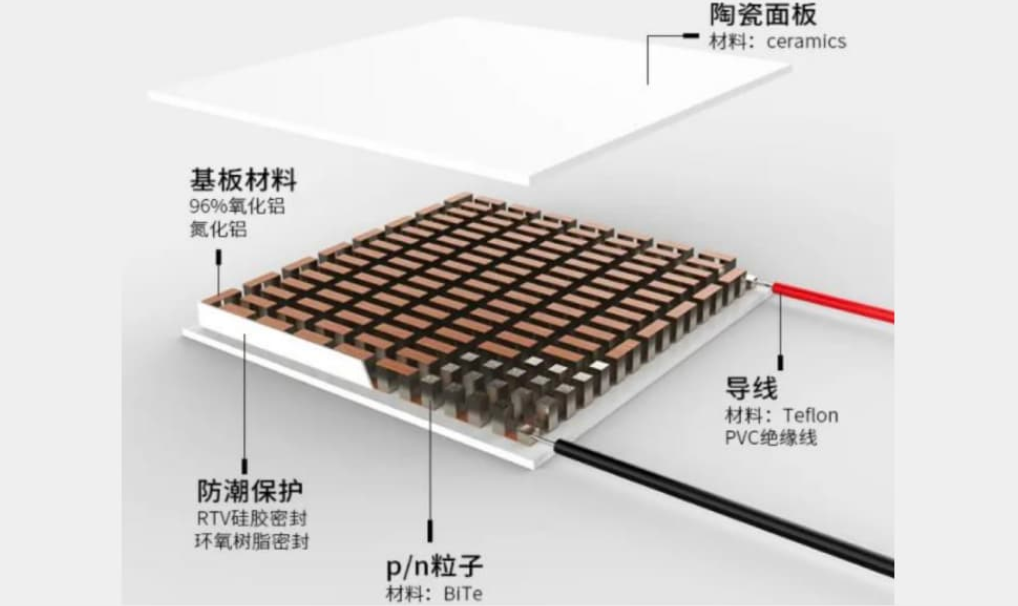
2. What is chip TEC temperature control?
Chip TEC temperature control refers to using TEC semiconductor refrigeration chips as heat regulation actuators in chip testing or semiconductor equipment, and forming a closed-loop system through temperature sensors, controllers and drive circuits to heat, cool and stabilize temperature control of chips, test seats, carriers or local structures.
Unlike a simple heater or air cooling system, TEC has the ability to adjust both hot and cold directions. The controller adjusts the driving direction and current size of the TEC based on the deviation between the set temperature and the real-time sampling temperature, so that the controlled object gradually approaches the target temperature and minimizes overshoot and steady-state fluctuations.
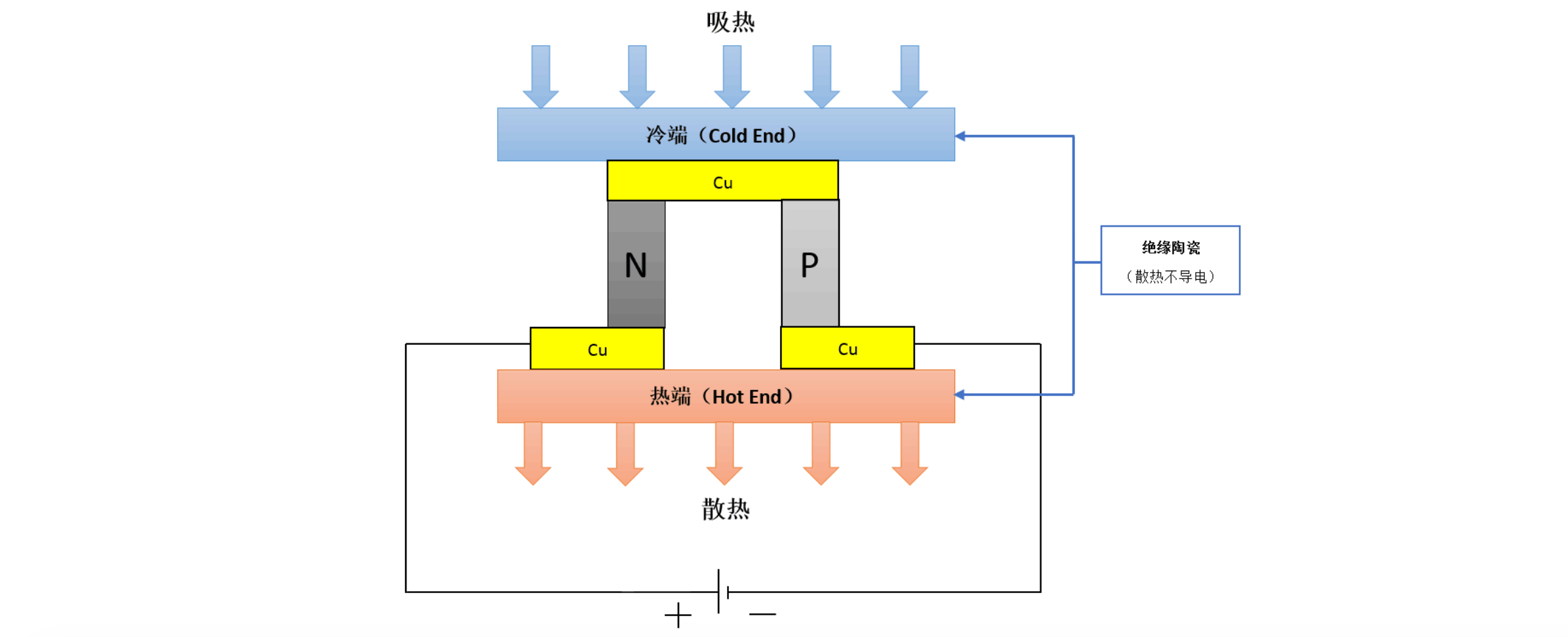
A typical system consists of the following components:
· TEC semiconductor refrigeration chip: performs heating or cooling actions.
· Temperature sensor: collects the temperature of the controlled point. Common types include NTC, PT100, etc., which are selected according to the temperature zone, accuracy and structure.
· TEC driver and temperature controller: output bidirectional current and run control algorithms such as PID.
· Heat dissipation component: effectively take away the heat generated or transported by the TEC hot end.
· Host computer and communication interface: used to set temperature, read data, configure parameters and integrate device control.
3. Principle of TEC temperature control technology
1. Peltier effect: realizing cooling and heating
TEC works using the Peltier effect. When DC current passes through a thermoelectric module made of semiconductor materials, heat absorption and heat release will occur on both sides of the module. By changing the direction of the current, the hot and cold ends can be exchanged to achieve switching between cooling and heating.
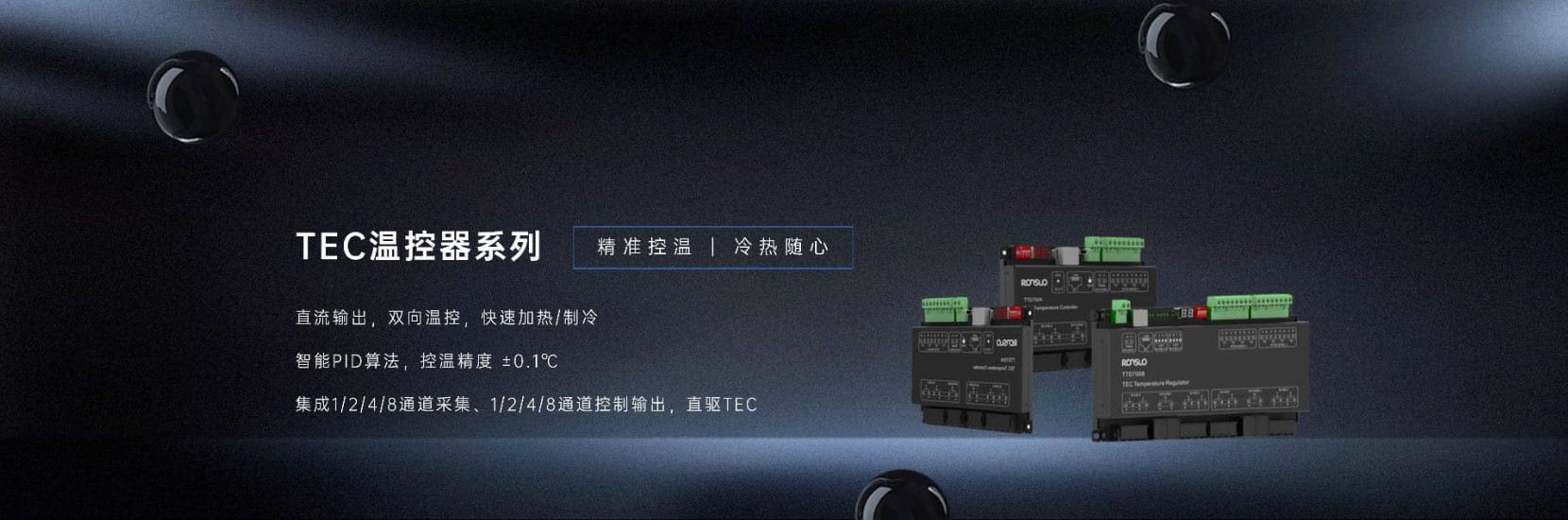
2. Bidirectional current drive: supports hot and cold bidirectional adjustment
In chip testing, equipment may need to be quickly dropped from room temperature to low temperature, or it may need to be raised from low temperature to high temperature. The bidirectional TEC drive can change the direction of the current according to the control requirements, avoiding the structural complexity caused by relying solely on the heater and refrigeration equipment to complete adjustments in different directions. The actual heating and cooling speed is also affected by factors such as TEC specifications, load heat capacity, contact thermal resistance, heat dissipation capacity and control strategy.
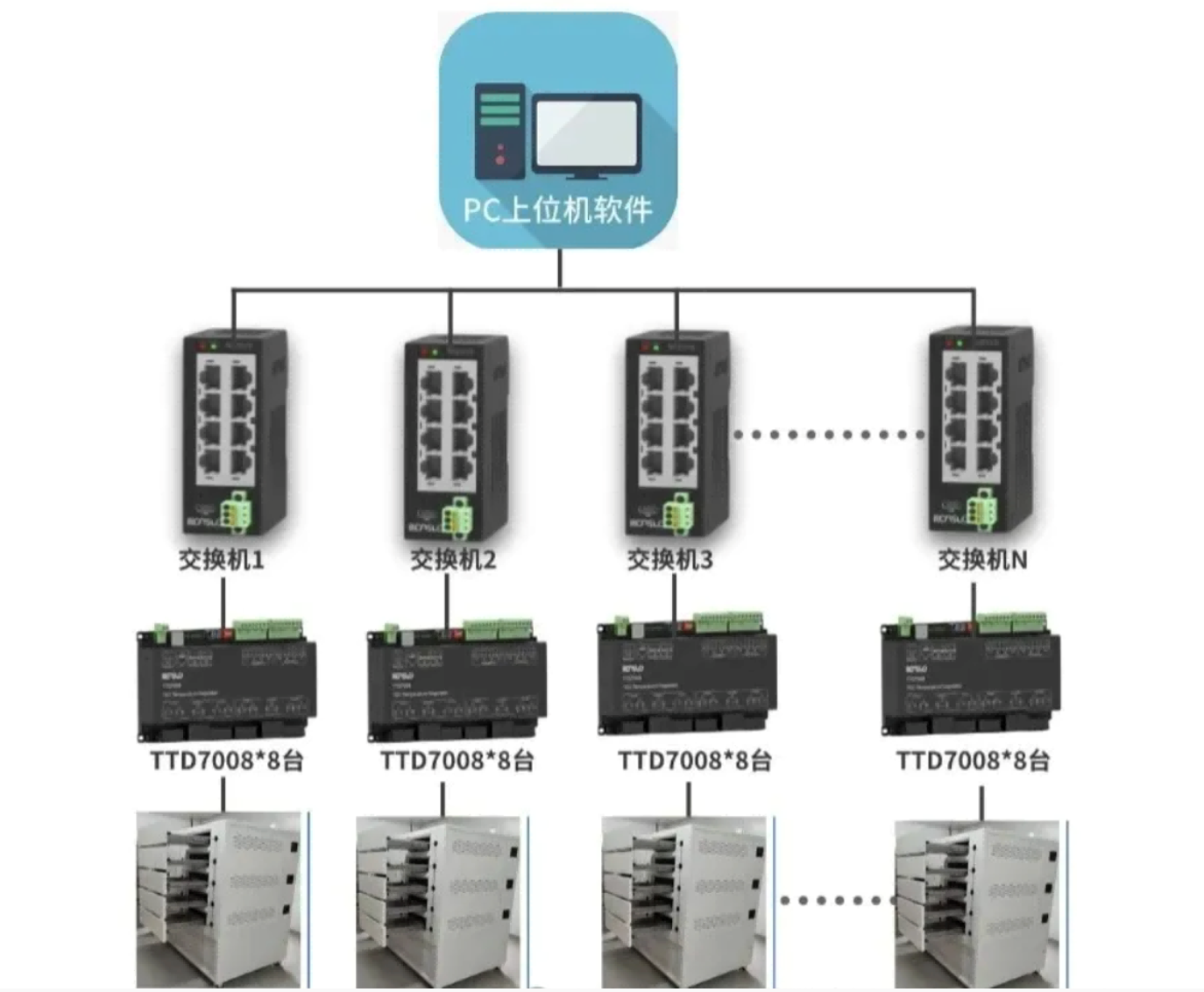
3. PID closed-loop control: reduce temperature deviation and fluctuation
The thermostat continuously reads the sensor temperature and compares it with the target set value, calculating the control output based on the deviation. Reasonable PID parameters can improve the response speed, overshoot and steady-state fluctuation during the heating/cooling process. Thermal inertia of different fixtures, chip packages, heat capacities and heat dissipation structures are different, and parameters usually need to be adjusted based on the actual load.
4. Multi-channel independent control: suitable for multi-station testing
When a piece of equipment needs to test multiple chips or multiple test positions at the same time, the multi-channel temperature controller can collect the temperature of each station and adjust the TEC output independently. The multi-channel solution can help reduce the number of device controllers, simplify wiring and system integration, but it needs to focus on evaluating the thermal coupling between channels, power supply capacity, heat dissipation capacity and consistency between channels.
4. Chip TEC temperature control solution of Beixin Huaan Temperature Control
For chip test fixtures, semiconductor test equipment and local hot and cold control scenarios, BX Huaan temperature control can configure solutions around temperature acquisition, bidirectional TEC drive, multi-channel control, communication integration and system protection. The actual solution should be selected based on the chip temperature zone, test cycle, TEC current, sensor type, number of channels and equipment structure.
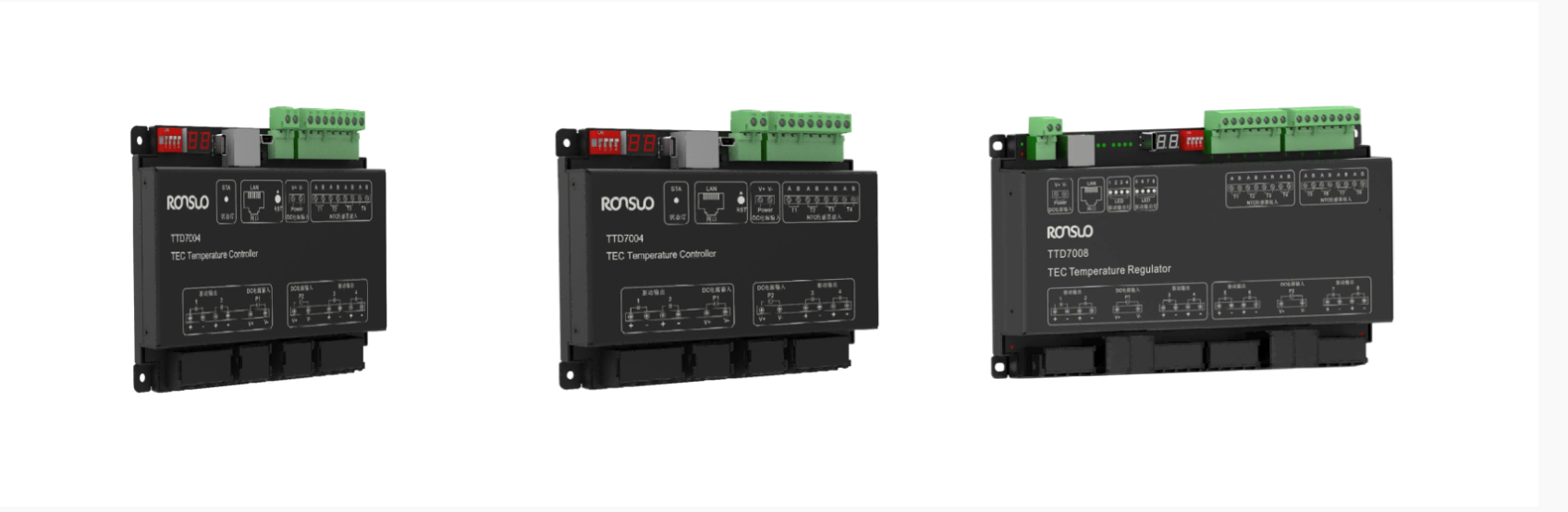
Plan composition
· Temperature collection: Select NTC, PT100 or other adaptive sensors according to the temperature measurement range, accuracy requirements and installation method.
· TEC drive: According to the TEC rated voltage, current and hot and cold end working conditions, select the bidirectional drive channel with corresponding output specifications.
· Control algorithm: PID parameters are adjusted according to the thermal inertia of the controlled object, and different control parameters are set for different working conditions when necessary.
· Multi-channel configuration: Configure independent control channels according to the number of test stations, and evaluate the total power and heat dissipation requirements when working simultaneously.
· Equipment communication: Integrate with host computer, test software or equipment PLC through Ethernet, Modbus TCP or other supported interfaces.
· Security protection: Combined with product functions and system design, configure protection strategies such as overcurrent, overtemperature, sensor abnormalities, and heat dissipation abnormalities.
Program features
· Bidirectional adjustment of hot and cold: the same TEC actuator can be used for heating and cooling as needed.
·Multi-channel expansion: adapts to equipment architecture with multiple test bits running in parallel.
· Closed-loop temperature control: dynamically adjust output based on real-time temperature feedback.
· Facilitates equipment integration: It can be connected to the host computer or automation control system through the communication interface.
· Customized by application: Can be configured by combining sensors, TEC loads, temperature zones and test cycles.

5. Related products and parameter references
The following is product direction and historical configuration information that can be used for solution communication. Product models have different hardware versions or customized configurations. The actual channel number, current, voltage, sensor type, communication protocol and protection function should be subject to the official specifications and technical confirmation results of the corresponding version.
Product model/category configuration reference application direction selection check key points
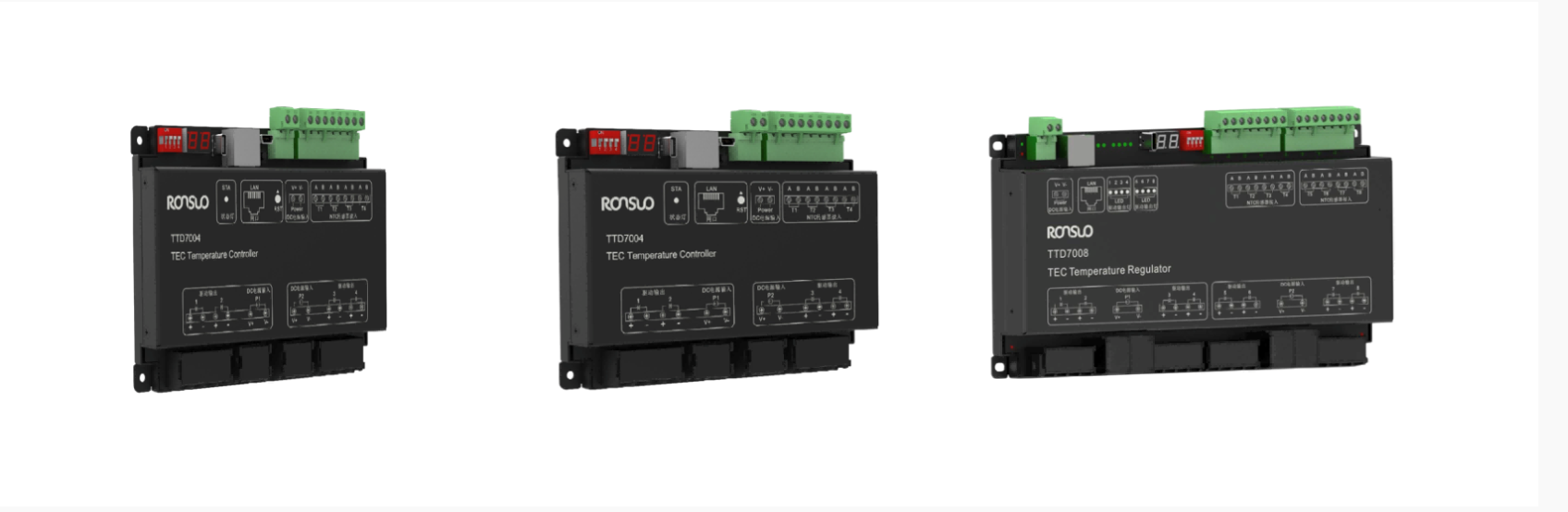
TTD7001/61011 NTC/thermocouple/PT100 uses 1 bidirectional TEC output; configured for single-channel 15A/30A single-station chip testing, local heating and cooling control, and high-power TEC temperature control to verify each channel's continuous/peak current, output voltage range, channel independence, and heat dissipation conditions
TTD7002/80082 NTC/thermocouple collects 2 bidirectional TEC outputs; configured for single-channel 15A multi-station chip testing, local hot and cold control to verify each channel's continuous/peak current, output voltage range, channel independence and heat dissipation conditions
TTD7004/60044 channels of NTC/PT1000 acquisition, 4 channels of bidirectional TEC output; some are configured for single-channel 15A multi-station chip testing, local hot and cold control to verify each channel's continuous/peak current, output voltage range, channel independence and heat dissipation conditions
TTD7008/60088 8-channel NTC/PT1000 acquisition, 8-channel temperature control direction; different configurations may have different output capabilities Parallel temperature control of more test positions to verify the number of channels, each channel current, total power and power supply requirements
6. Advantages of temperature control in chip testing applications
1. Improve the repeatability of test conditions
Through closed-loop temperature and stability control, the test equipment can be helped to maintain relatively stable working conditions near the set temperature and reduce the impact of environmental or load changes on the test process.
2. Support local temperature control and compact fixtures
TEC can be installed near a chip carrier, test seat, or local heat sink, and is suitable for applications that require heating and cooling of specific areas without temperature control of the entire test chamber.
3. Support hot and cold cycles and high and low temperature tests
TEC's bidirectional adjustment capability can be used to create local hot and cold cycle test conditions. The specific temperature range and cycle speed need to be verified in combination with TEC capabilities, heat dissipation system, fixture structure and test load.
4. Facilitates integration of multi-station equipment
The multi-channel solution can centrally manage the temperature collection and drivers of multiple test locations, making it easier for the host computer to unify settings, status monitoring and data recording.
7. Typical application scenarios
Chip function and performance testing
During chip function, power consumption, frequency or electrical parameter testing, local temperature adjustment is performed on the chip or test socket to verify performance under different temperature conditions.
Chip high and low temperature test
Test at specified temperature points or temperature ranges to verify the working status of the chip under high and low temperature conditions.
Chip aging and reliability testing
For verification under long-term operation or specific temperature stress conditions, the temperature control system needs to pay attention to long-term stability, sensor reliability and heat dissipation capabilities.
Chip hot and cold cycle test
By setting the temperature cycle curve, the performance and reliability of the device under repeated temperature changes are verified.
Optoelectronic chip and optical module device testing
Temperature control of local components inside laser chips, photodetectors or optical modules to help evaluate the impact of temperature on photoelectric performance.
8. What parameters should you pay attention to when selecting a chip TEC thermostat?
· Temperature range: Clarify the target minimum temperature, maximum temperature and ambient temperature, and confirm that the TEC and sensor meet the requirements.
· Temperature accuracy and stability: distinguish between display resolution, acquisition accuracy, control stability and overall system temperature uniformity.
· Heating and cooling speed: clearly test load heat capacity, target temperature difference, allowable overshoot and rhythm requirements, which cannot be judged solely by controller parameters.
· TEC drive capability: Check the operating voltage, continuous current, peak current, bidirectional output capability and total power of multi-channel simultaneous operation.
· Sensor type: Select NTC, PT100 and other sensors based on temperature zone, accuracy, installation space, response speed and cable length.
· Number of channels: Determine the number of channels based on the number of parallel test stations, and evaluate whether each channel requires independent settings and independent PID.
· Thermal design: Confirm the TEC hot end radiator, air cooling/water cooling capacity, mounting contact surface and thermal resistance to prevent the hot end temperature from continuing to rise.
· Communication and software: Confirm whether Modbus TCP, RS485 and other interfaces are compatible with the equipment control system, and confirm the registers and control processes.
· Protection and reliability: Confirm the alarm and protection logic when the sensor is disconnected, output overcurrent, overtemperature and heat dissipation abnormality.
- Prev Article COC / COB drawer-type aging equipment TEC temperature control solution
- Next Article 暂无
News
- Invitation | BexHua's Integrated Temperature Control Solution for New Energy Systems will be showcased at the 2025 High-Tech Energy Storage Conference.
- EVE Energy launches its new all-tab cylindrical battery, propelling tool lithium batteries into a new era of high-rate performance!
- BexHua releases multiple TEC thermostats — meeting diverse temperature control needs in various scenarios.
- The First Second Member Congress of the DeepCore Alliance and the Year-End Exchange Meeting on Semiconductor Industry Development are about to be held.
- Application of BexHuaTEC temperature controllers in laser temperature control
- PCR instrument TEC temperature control application
-

Email: 17266996414@163.com
-

Hotline: 17266996414
-

Address: Units 1401-12, Building 1, Shenzhen Software Industry Base, Nos. 81, 83, & 85 Gaoxin South 10th Road, Binhai Community, Yuehai Subdistrict, Nanshan District, Shenzhen

Filing No.: 粤ICP备2026132251号
-
Products
 Temperature controller Temperature acquisition device Industrial I/O Modules Industrial gateway Power Regulator
-
Solutions
Semiconductor/Chip Industry New energy/energy storage industry Optoelectronics/Display Industry Rubber/Plastics Industry Biopharmaceutical industry Industrial Furnaces/Thermal Industry Mechanical Automation Industry Other integrated applications -
Support
Manuals
Tutorials
Tools
-
News
Company News Exhibition News Media Information