Beixin Huaan Temperature Control · Multi-Channel TEC Temperature Control Solution
-转换自-png_0e03f896845342029ad2172b4936388e.webp)


Solutions
Industry Location:
  Solutions
 News
News
- Invitation | BexHua's Integrated Temperature Control Solution for New Energy Systems will be showcased at the 2025 High-Tech Energy Storage Conference.
- EVE Energy launches its new all-tab cylindrical battery, propelling tool lithium batteries into a new era of high-rate performance!
- BexHua releases multiple TEC thermostats — meeting diverse temperature control needs in various scenarios.
- The First Second Member Congress of the DeepCore Alliance and the Year-End Exchange Meeting on Semiconductor Industry Development are about to be held.
- Application of BexHuaTEC temperature controllers in laser temperature control
- PCR instrument TEC temperature control application
COC / COB drawer-type aging equipment TEC temperature control solution
 Update Time:2026-09-23 14:39:58
 Views:
857
Views:
857 I. Project Overview
With the advancement of high-speed optical communications, data center optical modules, and optoelectronic chip industries, high-integration optoelectronic packaging solutions—such as COC and COB—now impose stricter requirements on device reliability, temperature stability, and long-term operational performance. In mass production, COC/COB devices typically undergo burn-in testing, during which continuous stress is applied under specified temperature, operating current, and duration conditions to identify early failures and validate long-term reliability.
For COC/COB aging equipment featuring drawer-type design, high density, and multiple temperature zones, Beixin Huaan Temperature Control offers a multi-channel independent closed-loop temperature control solution based on TEC (Thermoelectric Cooler). This solution enables temperature data acquisition, PID control, bidirectional TEC drive, current/voltage monitoring, and multiple protection mechanisms, thereby meeting the requirements for precise, stable, and traceable temperature control in optoelectronic chip aging testing.
II. Introduction to COC/COB Technology
2.1 COC(Chip on Carrier)
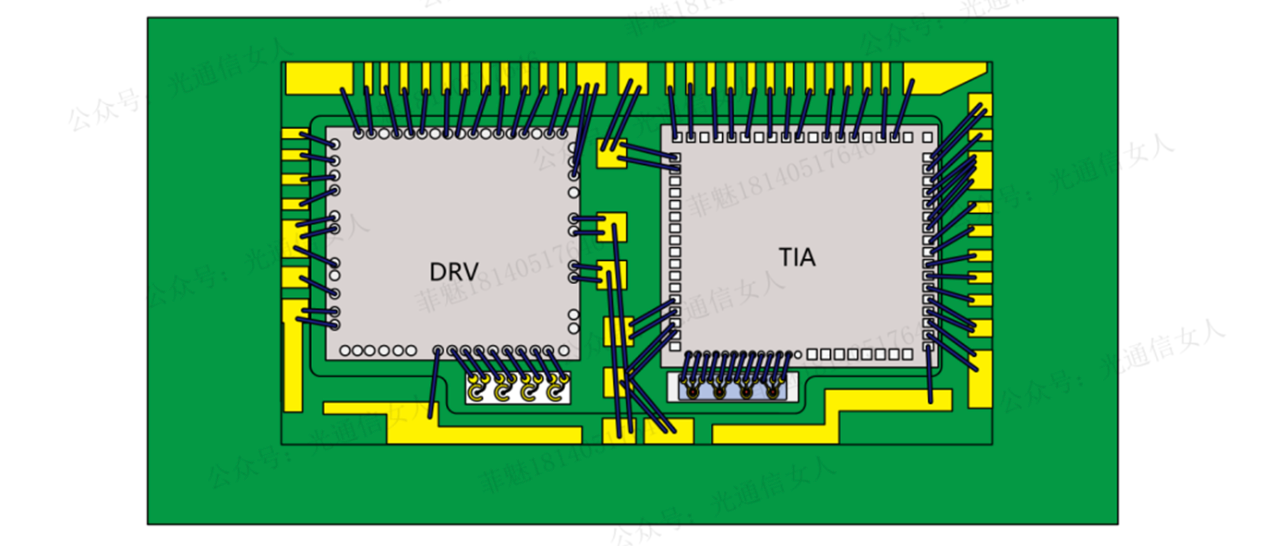
COC stands for "Chip on Carrier," a technology that integrates laser chips, modulator chips, SOA chips, and other optoelectronic chips onto a dedicated carrier substrate, with electrical connections between the chips and the substrate achieved via gold wire bonding or other interconnect methods. COC offers high modularity, facilitates testing and subsequent assembly, and can be applied to DFB, EML, SOA, and other optoelectronic chips for optical communications.
· Typical applications: optical communication lasers, EML, SOA, data center optical components, etc.
· Aging test parameters: operating temperature, operating current, operating voltage, optical power, wavelength, and long-term stability.
· Temperature control requirements: ensure stable long-term operation and maintain temperature consistency across different test units.
2.2 COB(Chip on Board)
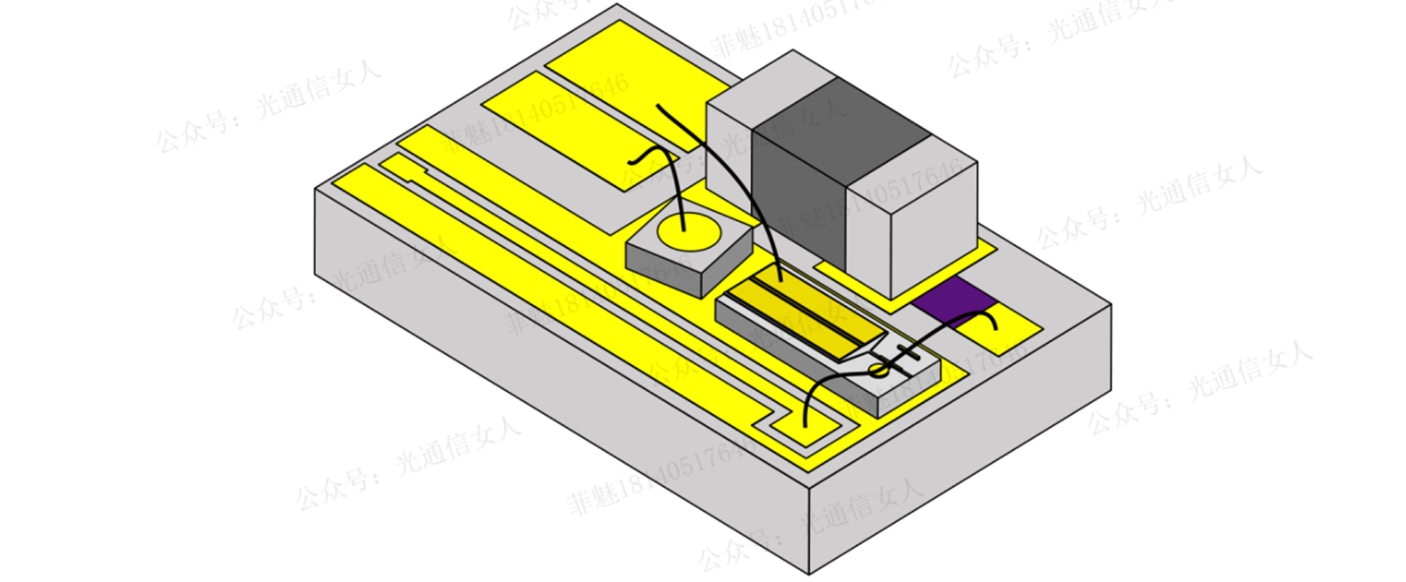
COB stands for "Chip on Board," a technology in which a bare chip is directly mounted on a PCB or other substrate, with electrical connections established via gold wire bonding, flip-chip mounting, or other methods. COB features a compact structure, high integration density, and short interconnect paths, making it widely used in high-speed optical communications and high-density optoelectronic devices.
· Typical applications: VCSELs, optical communication devices, high-speed optical modules, and other high-density optoelectronic components.
· Key focus areas: chip temperature rise, temperature uniformity, thermal resistance, and long-term reliability.
· Aged equipment requires a balance between high-density layout and stable heat dissipation.
三、Why are aging tests required for COC/COB?
During prolonged operation, optoelectronic chips are subject to various factors, including temperature, operating current, thermal stress, and packaging stress. Burn-in testing involves continuous operation under specified temperature and operating conditions to bring potential early failures and performance drift to light as early as possible, thereby enhancing the products out-of-factory reliability and consistency.
· Accelerate the screening of potential early failure devices.
· Verify the long-term stability of the test chip under specified temperature and operating current conditions.
· Monitor changes in key parameters, such as optical power, wavelength, and operating current.
· Generate comprehensive aging data to provide a foundation for quality traceability and process optimization.
四、Introduction to TEC Temperature Control Technology
TEC (Thermoelectric Cooler) is also known as a Peltier device. TEC utilizes the Peltier effect to transfer heat from one side to the other using a direct current. By reversing the direction of the current, the roles of the cold and hot ends can be inverted; thus, a TEC can simultaneously provide both heating and cooling capabilities.
· Bidirectional temperature control: the same TEC can be used for both heating and cooling.
· Fast response time: ideal for applications requiring rapid temperature regulation and dynamic compensation.
· Compact design: facilitates integration into drawer-type, high-density test fixtures.
· Independent closed-loop system: combines a temperature sensor with a PID algorithm to achieve precise temperature control.
4.1 Principle of TEC Closed-Loop Control
Target temperature → PID control → TEC drive → COC/COB devices → temperature sensor → actual temperature feedback → PID control.
The controller continuously compares the target temperature with the actual temperature and dynamically adjusts the TEC output based on the temperature difference. When the actual temperature falls below the target value, the heating output is increased; when the actual temperature exceeds the target value, cooling compensation is applied, thereby establishing a stable closed-loop temperature control system.
4.2 Importance of Heat Dissipation at the Hot End of TEC
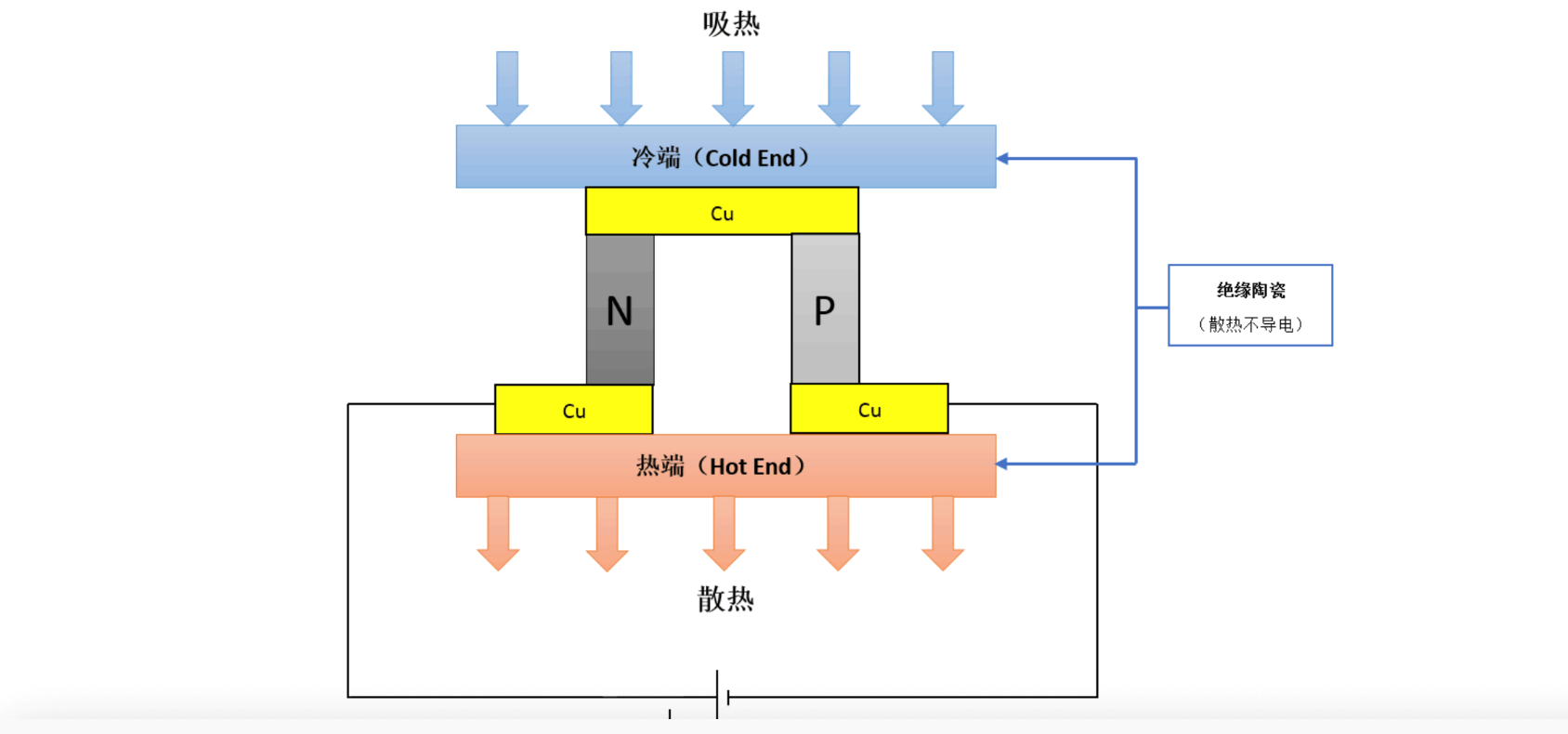
During TEC operation, both the heat absorbed by the chips cold side and the Joule heating generated by the TEC itself converge at the hot side. If the hot side lacks sufficient heat dissipation capacity, its temperature may rise continuously, thereby reducing the effective temperature difference capability of the TEC; in severe cases, this could lead to failure of the temperature control system or even damage to the device. Consequently, a TEC solution must incorporate a dedicated hot-side heat dissipation system.
· Air-cooled: Suitable for medium-to-low heat load scenarios.
· Water-cooled plate: Suitable for high heat load and high-density aged equipment.
· Heat sink + fan: simple structure, facilitating modularization.
· The actual equipment selection must be based on calculations of TEC power, target temperature, ambient temperature, and thermal load.
五、TEC Temperature Control Solution for COC/COB Drawer-type Aging Equipment
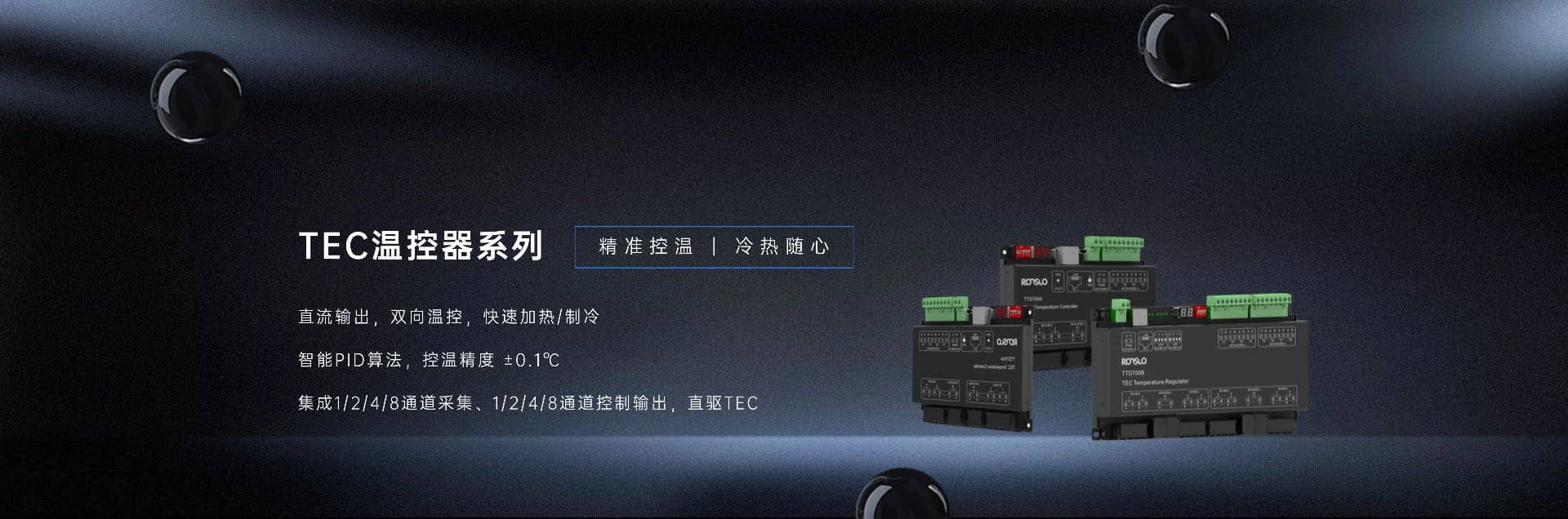
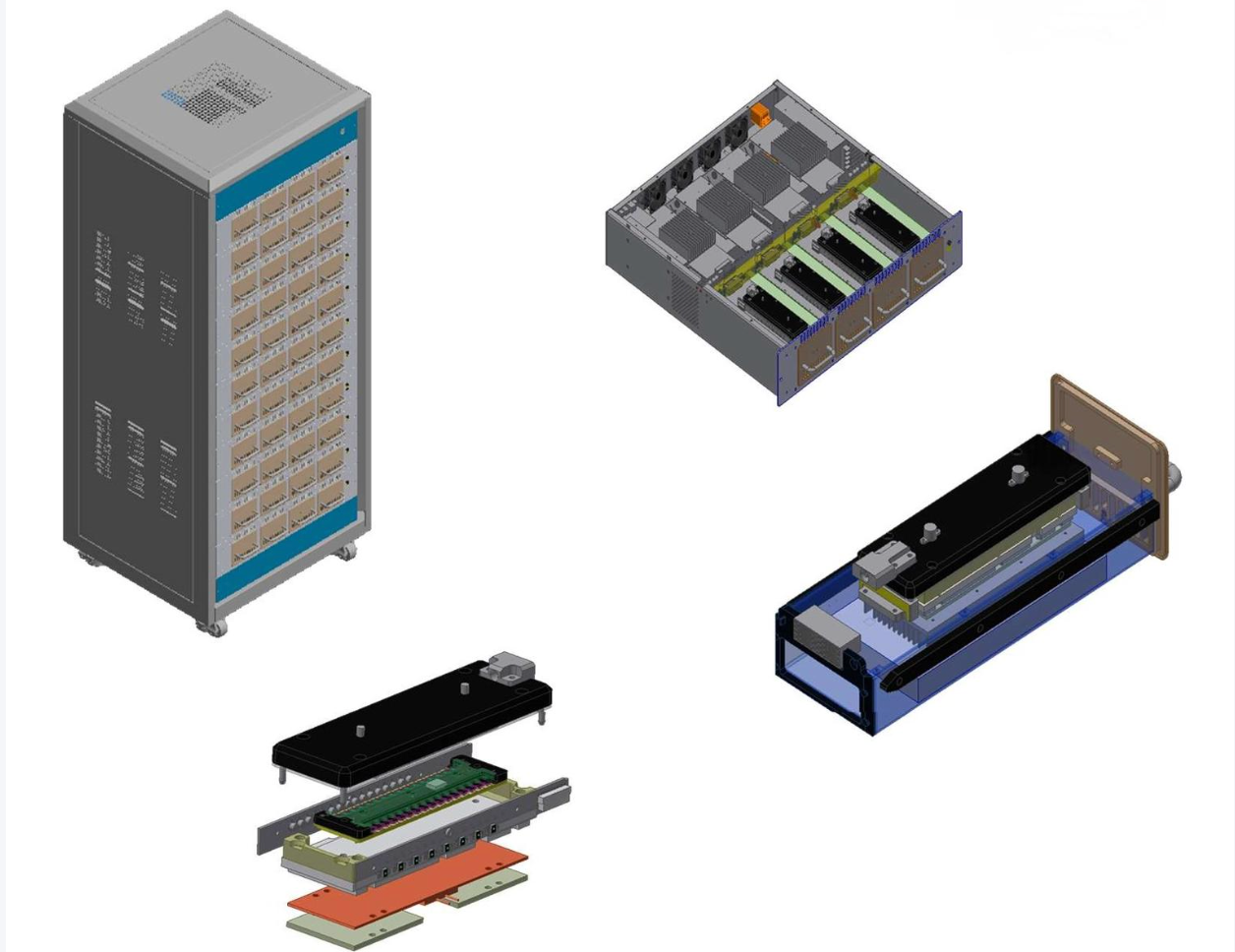
We recommend adopting a modular architecture featuring "one drawer per temperature zone, with multiple independent closed-loop channels." Each drawer is configured with either one-to-four or one-to-eight TEC temperature controllers based on its actual structural requirements. Multiple drawers are connected to the host computer via Ethernet or Modbus TCP, enabling unified parameter configuration, status monitoring, and aging data management.
5.1 System Architecture
Host computer ↓ Ethernet / Modbus TCP Drawer 1 → TEC thermostat → TEC1/TEC2/TEC3/TEC4 → COC/COB Drawer 2 → TEC thermostat → TEC1/TEC2/TEC3/TEC4 → COC/COB Drawer N → TEC thermostat → TEC1/TEC2/TEC3/TEC4 → COC/COB
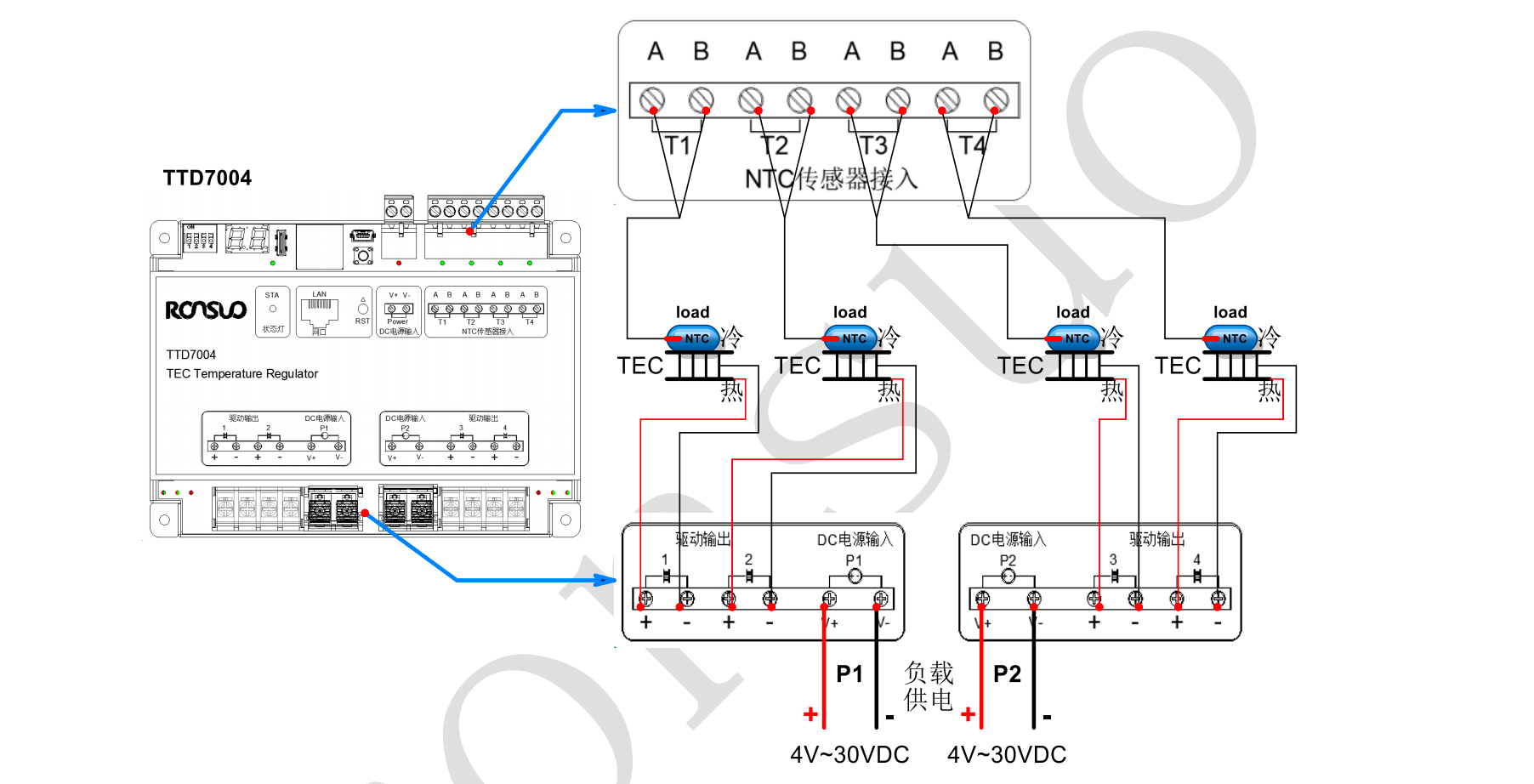
For equipment with a single drawer configured with four independent temperature zones, the TTD7004 can be used to implement one-to-four independent TEC control; for equipment with higher channel density, a one-to-eight configuration may be considered based on the actual load requirements. The specific number of channels, TEC current, and temperature control specifications shall be determined in conjunction with the customers fixture and thermal load.
5.2 Single-Channel Control Link
Temperature sensor → Temperature acquisition → PID algorithm → TEC bidirectional drive → Target device → Temperature feedback.
· Each channel independently measures the temperature.
· Each channel is independently controlled via PID control.
· Each channel has independent TEC heating and cooling.
· Real-time monitoring of TEC current and voltage.
· Enters a safety protection state under abnormal conditions.
VI. Beixin Huaan TEC Temperature Control Solution
6.1 Core Product Recommendations
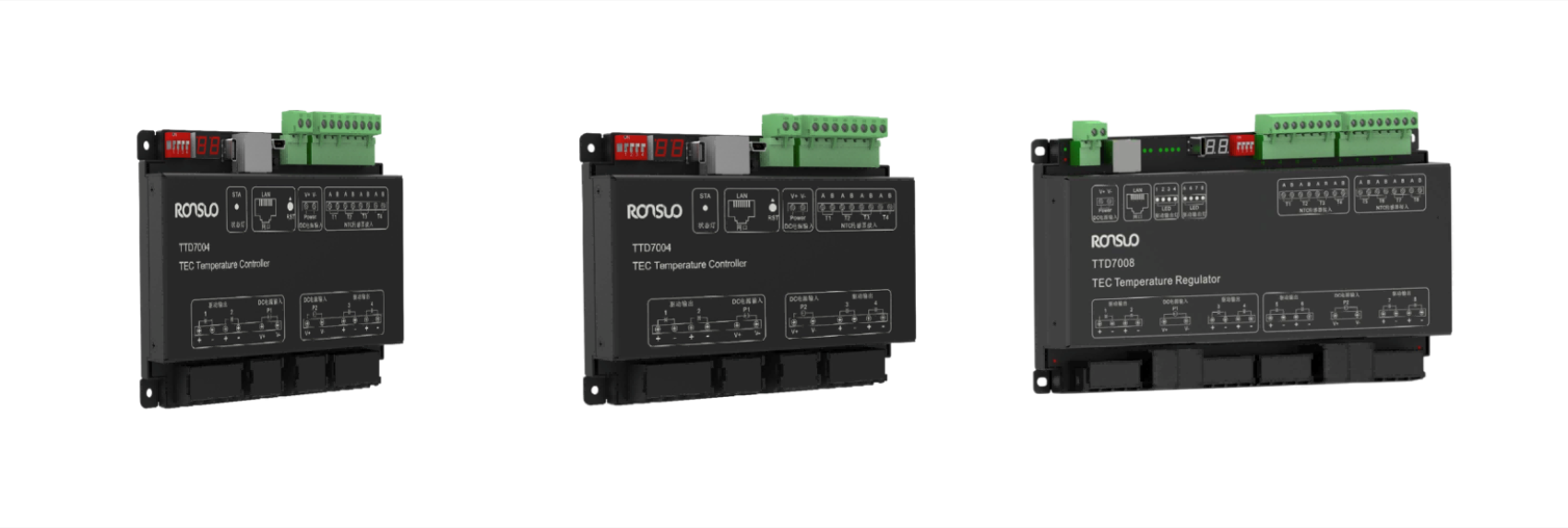
| scheme | recommend products | Typical Applications |
|---|---|---|
| 1拖 1 TEC | TTD700 1 | COC/COB drawer-type aging, coupling, and compact multi-temperature zone equipment |
| 1 trailer, 2 TECs | TTD700 2 | COC/COB drawer-type aging, coupling, and compact multi-temperature zone equipment |
| 1-to-4 TEC | TTD7004 | High-density, multi-channel COC/COB aging equipment |
| 1 trailer towing 8 vehicles TEC | TTD7008 | High-density, multi-channel COC/COB aging equipment |
| Customized Solution | Based on the TEC current, temperature range, and fixture design | High-power, high-precision, or specially configured equipment |
6.2 Main Features
· Multi-channel independent temperature acquisition.
· PID closed-loop temperature control.
· TEC bidirectional heating/cooling.
· Real-time monitoring of TEC current and voltage.
· Current and voltage limiting protection.
· overtemperature protection.
· Sensor open/abnormality protection.
· Output short-circuit/abnormality detection.
· Handle communication anomalies securely.
· Device-level communication interfaces, including Ethernet, Modbus TCP, RS-485, and RS-232.
VII. Key Features of the Plan
| characteristic | explain |
|---|---|
| High-precision closed-loop temperature control | Using real-time temperature sensor feedback and a PID algorithm, dynamic temperature regulation is applied to the COC/COB devices. |
| Integrated heating and cooling | TEC bidirectional drive enables heating or cooling compensation based on the actual temperature. |
| Multi-channel high density | Supports multi-channel TEC architectures such as 1-to-4 and 1-to-8, reducing the number of controllers and equipment cabling requirements. |
| Independent temperature zone for drawers | Each drawer or temperature zone can be independently set to a target temperature, making it ideal for modular aging equipment. |
| Real-time status monitoring | Simultaneous monitoring of temperature, TEC current, TEC voltage, and output status facilitates equipment operation and management. |
| Multi-layered security protection | Long-term operational risks are mitigated through mechanisms such as current limiting, voltage limiting, overtemperature protection, sensor anomaly detection, output anomaly detection, and communication anomaly detection. |
| Modular scalability | The temperature control unit can be expanded based on the number of drawers and the number of temperature zones, facilitating a modular design for the equipment platform. |
| Suitable for continuous aging | For prolonged continuous operation conditions, an integrated design can be implemented by combining a heat dissipation system with appropriate protection strategies. |
VIII. Typical Application Scenarios
· COC laser chip drawer-type aging apparatus.
· COB photonic chip aging and reliability testing equipment.
· VCSEL chip aging test equipment.
· Test equipment for optical communication chips, including DFB, EML, and SOA.
· Equipment for optical module coupling, aging, and temperature cycling.
· Test equipment for optical components in data centers and high-speed optical communication components.
IX. Value of the Proposal
Beixin Huaan Temperature Control integrates TEC drive, temperature acquisition, PID control, real-time monitoring, and protection functions into a multi-channel temperature control module. Utilizing a modular design, it is compatible with COC/COB drawer-type aging equipment, providing equipment manufacturers with scalable solutions ranging from single-drawer temperature control to full-machine multi-drawer temperature control. Core value propositions: multi-channel capability, independent temperature zones, bidirectional TEC, closed-loop control, real-time monitoring, multiple protection mechanisms, and standardized communication with the equipment host computer.
X. Key Considerations for Implementation of the Plan
· The selection of TEC specifications shall be based on the maximum thermal load, target temperature, and ambient temperature.
· The heat dissipation capacity of the TEC must be matched to the maximum cooling power; selection should not be based solely on the cold-end temperature.
· The temperature sensor should be placed as close as possible to the actual chip under test or to critical temperature control points to minimize measurement errors caused by temperature gradients.
· The fixture material, thermal interface material, clamping force, and structural thermal resistance will directly affect the final temperature control performance.
· The control accuracy of a thermostat is not equivalent to the actual temperature accuracy of its chip; the final performance specifications must be verified through full-system actual measurements.
· For prolonged high-load aging, it is recommended to simultaneously monitor the TEC current, voltage, and hot-end temperature/heat dissipation status.
· The specific temperature range, TEC current, voltage, number of channels, and stability criteria shall be finalized in the project technical specification document.
XI. Conclusion
COC/COB drawer-type aging equipment imposes stringent requirements on its temperature control system, including multi-channel design, high density, independent temperature zones, long-term stable operation, and safety protection mechanisms. Leveraging TEC bidirectional temperature control technology—combined with temperature data acquisition, PID closed-loop control, TEC current/voltage monitoring, and multiple protection features—Beixin Huaan can provide modular TEC temperature control subsystems tailored for COC/COB aging equipment.
Utilizing multi-channel architectures—such as TTD7004 (1-to-4) and TTD7008 (1-to-8)—the system supports flexible expansion based on the number of device drawers and temperature zones, enabling equipment manufacturers to achieve more compact, standardized, and easy-to-maintain temperature control designs.
- Prev Article Hot runner intelligent temperature control solution
- Next Article 暂无
News
- Invitation | BexHua's Integrated Temperature Control Solution for New Energy Systems will be showcased at the 2025 High-Tech Energy Storage Conference.
- EVE Energy launches its new all-tab cylindrical battery, propelling tool lithium batteries into a new era of high-rate performance!
- BexHua releases multiple TEC thermostats — meeting diverse temperature control needs in various scenarios.
- The First Second Member Congress of the DeepCore Alliance and the Year-End Exchange Meeting on Semiconductor Industry Development are about to be held.
- Application of BexHuaTEC temperature controllers in laser temperature control
- PCR instrument TEC temperature control application
-

Email: 17266996414@163.com
-

Hotline: 17266996414
-

Address: Units 1401-12, Building 1, Shenzhen Software Industry Base, Nos. 81, 83, & 85 Gaoxin South 10th Road, Binhai Community, Yuehai Subdistrict, Nanshan District, Shenzhen
-转换自-png_4bf63678d09d45d28a725ad76a233ad6.webp)
Filing No.: 粤ICP备2026132251号
-
Products
 Temperature controller Temperature acquisition device Industrial I/O Modules Industrial gateway Power Regulator
 -
Solutions
Semiconductor/Chip Industry New energy/energy storage industry Optoelectronics/Display Industry Rubber/Plastics Industry Biopharmaceutical industry Industrial Furnaces/Thermal Industry Mechanical Automation Industry Other integrated applications -
Support
Manuals
Tutorials
Tools
-
News
Company News Exhibition News Media Information